Browsed by
Category: News

Ranil Wickremesinghe Sworn in as Sri Lanka’s New President

Ranil Wickremesinghe Sworn in as Sri Lanka’s New President

In a highly secured parliamentary complex, Ranil Wickremesinghe was inaugurated at 73. He became the New President of Sri Lanka. This event marks the start of a new chapter in the country’s politics. Despite his connection to the controversial Rajapaksa regime, which many blame for financial woes, Wickremesinghe takes the reins. His leadership comes as protests calm, thanks to a strong parliament vote of 134 to 82.

He promises peace and order as Sri Lanka‘s eighth executive president. Wickremesinghe vows to bring change and stability during ongoing political crisis.

Ranil Wickremesinghe will serve as president until November 2024, showcasing a pivotal moment. Sri Lanka faces severe economic challenges, including inflation and shortages. The new leader’s priority is to kickstart the economy and restart talks with the International Monetary Fund. They hope to secure a $3 billion bailout.

The nation’s path forward relies on Wickremesinghe’s policies and reforms, states former Speaker Karu Jayasuriya. He underscores the need for a multi-party interim government to address these challenges swiftly.

As Wickremesinghe prepares for his role, he faces a nation of diverse communities. He targets education reforms as critical to recovery and growth. The entire country watches closely, hoping for effective governance.

Key Takeaways

  • Ranil Wickremesinghe was inaugurated as the New President of Sri Lanka within the parliament complex.
  • He won the presidency with 134 votes, serving until November 2024 as the nation’s eighth executive president.
  • Sri Lanka’s economic crisis has incited widespread protests and a public demand for governmental change.
  • Wickremesinghe, with a 45-year-long parliamentary career, has the urgent task of steering the country towards economic recovery.
  • Implementing educational reforms sustains as a focus in preparing for a resilient future workforce in Sri Lanka.
  • Former Speaker Karu Jayasuriya has called for reforms and suggests a multi-party interim government for economic stability.

A Tumultuous Path to Presidency

In recent years, Sri Lanka faced a huge Economic Crisis. This crisis led to a big Political Change. High inflation and the lack of basics caused major Protests. This made people ask for new Leadership.

The Economic Crisis Leading to Political Change

This tough situation made citizens very upset. They protested against the government’s failure to fix the economy. These conditions prepared the ground for big political shifts. It brought new leaders into the Sri Lanka President race.

Protests and the Departure of Gotabaya Rajapaksa

Many complaints led to big protests. The protests wanted changes and responsibility. They played a key role in Gotabaya Rajapaksa‘s exit. He left the presidency amid scandals and poor economic decisions. This forced him to resign and leave Sri Lanka.

Ranil Wickremesinghe’s Controversial Path to Leadership

Ranil Wickremesinghe’s rise to power was full of disagreements. Going from Prime Minister to the Controversial Acting President role, then President, was tough. This period included a state of emergency and the military stopping protests at government places. His journey promised a chance to improve the economy during chaos.

During this time, elections brought big changes and reform promises. For more details, check out OMP Sri Lanka. They have an article about President Anura Kumara Dissanayake’s decisive moves.

The future is still unclear, but there’s hope for better leadership in Sri Lanka. People want leaders who put the country first, not their own needs.

Public Reception and Political Backdrop

Ranil Wickremesinghe became Sri Lanka’s president during a tough time. The country, home to 22 million, is facing a big crisis. People have mixed feelings about him. Some hope he will improve things, while others doubt it. Wickremesinghe has been prime minister six times. He’s now leading the nation through severe economic problems.

Many people didn’t like the choice of Wickremesinghe as president. They wanted big changes, not someone close to the old government. There have been big protests in Colombo since April 9. But Wickremesinghe is trying to fix the economy. He is talking to the IMF and World Bank. This is like when he got $4.5bn in help in the early 2000s.

Wickremesinghe’s state of emergency move shows how serious the situation is. Sri Lanka badly needs good leadership now. Wickremesinghe is skilled in dealing with other countries. This will help him as he talks to the IMF and countries like China and India. But everyone will watch him closely. They want to see if he can bring the country together and solve the debt problems.
Sri Lanka’s External Debt Reaches USD 37.5 Billion

Sri Lanka’s External Debt Reaches USD 37.5 Billion

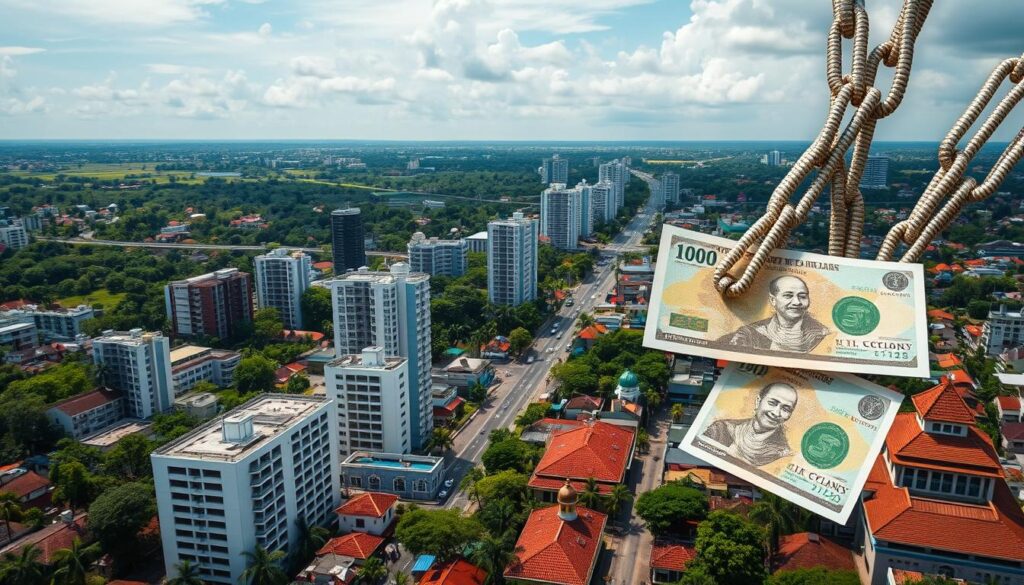
Sri Lanka’s external debt hit USD 37.5 billion in June 2024. The Ministry of Finance’s Mid-Year Fiscal Position Report revealed this alarming figure. The country struggles with economic challenges while working on recovery and reforms.

Sri Lanka's External Debt Reaches USD 37.5 Billion as of June 2024

The report shows Sri Lanka’s dire economic state. It highlights the urgent need for fiscal consolidation and debt management. The government faces tough challenges with low foreign currency reserves and looming debt payments.

The report breaks down Sri Lanka’s external debt in detail. From January to August 2021, foreign financing commitments reached USD 37.5 billion. This huge debt burden poses significant obstacles to long-term economic growth and development.

Debt Crisis and Economic Turmoil

Sri Lanka faces a severe debt crisis, with external debt reaching USD 37.5 billion. Foreign currency reserves are depleted, and the country has defaulted. This has left Sri Lanka in a precarious financial position.

The debt crisis is part of a larger trend in the Asia-Pacific region. Government debt among Asian Development Bank members has increased significantly. South Asian countries have been hit the hardest.

Sovereign Default and Foreign Currency Reserves

Sri Lanka is struggling to meet its financial obligations. The country’s external debt service at risk is $598 billion from 2021-2025. Private creditors hold 52% of the debt at risk, totaling $311 billion.

Fiscal Consolidation and Austerity Measures

The Sri Lankan government is implementing fiscal consolidation and austerity measures. These aim to reduce spending, increase revenue, and improve the country’s fiscal position. However, these measures have led to increased hardships for the population.

The global environment poses challenges to Sri Lanka’s efforts to restore public finances. With obstacles to growth and rising borrowing costs, economic recovery remains difficult. The country faces an uphill battle in its quest for stability.

Sri Lanka’s External Debt Reaches USD 37.5 Billion as of June 2024

Sri Lanka’s external debt hit USD 37.5 billion in June 2024. The Mid-Year Fiscal Position Report revealed this alarming figure. It highlights the nation’s economic challenges and the need for better debt management.

Mid-Year Fiscal Position Report Findings

The report analyzes Sri Lanka’s fiscal health in detail. It focuses on the country’s external debt obligations. The report also examines the debt’s impact on the economy.

Debt Servicing Payments: Principal and Interest Breakdown

Debt servicing payments totaled USD 503 million from January to June. This includes USD 275.1 million in principal repayments. Interest payments accounted for USD 227.9 million.

These figures show the heavy burden of debt servicing. It strains the nation’s financial resources significantly. The government must address this issue promptly.

Rising external debt threatens Sri Lanka’s economic stability and growth. Effective debt management strategies are crucial. These include debt restructuring, fiscal consolidation, and attracting foreign investment.

Interim Debt Standstill Policy

Sri Lanka introduced an interim debt standstill policy on April 12, 2022. This move aimed to tackle the growing external debt crisis. The policy temporarily halted repayments to bilateral and commercial creditors.

By June 2024, Sri Lanka’s external debt hit USD 37.5 billion. The repayment pause led to USD 5.67 billion in unpaid principal. Unpaid interest totaled USD 2.527 billion.

Temporary Suspension of Repayments to Bilateral and Commercial Creditors

The policy affects loans from foreign governments and commercial lenders. It covers banks and bondholders too. This pause aims to give Sri Lanka time to stabilize its economy.

The country now has a chance to negotiate a comprehensive debt restructuring plan. This breathing space is crucial for finding long-term solutions.

Accumulation of Unpaid Principal and Interest

The policy has provided temporary relief but also caused a buildup of unpaid amounts. In early 2024, debt service payments reached USD 503 million. This included USD 275.1 million in principal and USD 227.9 million in interest.

These growing arrears highlight the urgent need for a lasting solution. Sri Lanka must address its debt crisis quickly to avoid further economic strain.

Debt Restructuring and International Monetary Fund (IMF) Involvement

Sri Lanka faces a mounting debt crisis. The government is negotiating debt restructuring and seeking IMF assistance. On March 20, 2023, the IMF approved a 48-month Extended Fund Facility (EFF) arrangement.

The EFF totals SDR 2.286 billion (about $3.0 billion). It aims to support Sri Lanka’s efforts to stabilize its economy. The IMF’s involvement provides financial support and guidance for necessary reforms.

The immediate disbursement was SDR 254 million (around $333 million). A policy-based loan for the Economic Stabilization Program offers additional budget support. This support depends on Sri Lanka completing prior actions under the IMF EFF.

Sri Lanka’s debt crisis results from recurring fiscal and current account deficits. These led to unsustainable public debt levels. Policy missteps and external shocks worsened the country’s economic vulnerabilities.

A 2019 change in government administration further weakened public finances. Significant tax cuts were implemented. Reform measures were suspended. These actions deepened the crisis.

Comprehensive debt restructuring is vital for Sri Lanka’s recovery. The global community must increase debt relief efforts. This action can prevent a worsening development crisis in Sri Lanka and other struggling economies.

A new international debt restructuring initiative is proposed. It involves comprehensive restructuring and write-offs. This approach could help countries return to growth and financial markets faster.

Sri Lankan Musicians Collaborate for Peace Concert Promoting Unity

Sri Lankan Musicians Collaborate for Peace Concert Promoting Unity

Leading Sri Lankan musicians have united for a peace concert celebrating diversity. This event showcases music’s power to unite people. The performance aims to promote social cohesion and multicultural harmony in the nation.

The concert features artists from various musical backgrounds. It includes traditional Sri Lankan folk music, classical styles, and contemporary genres. This lineup highlights Sri Lanka’s rich cultural tapestry and the importance of embracing diversity.

Sri Lankan Musicians Collaborate for Peace Concert Promoting Unity

A special collaboration is one of the concert’s highlights. Renowned musician Sanka Dineth teams up with artists from India and Pakistan. They’ve composed a trilingual song in Sinhala, Tamil, and Hindi.

This song symbolizes music’s ability to transcend barriers. It promotes peace initiatives across borders. The concert showcases Sri Lankan musicians’ talent and serves as a platform for unity.

The event brings together artists from different communities. It celebrates a shared love for music and its ability to bridge divides. This concert contributes to building a more harmonious society in Sri Lanka.

Interfaith Music Initiatives Foster Harmony

Musicians and faith leaders unite to promote healing after Sri Lanka’s Easter bombings. They use interfaith music to bridge divides between communities. These initiatives aim to foster unity in the face of adversity.

Muslim Choral Ensemble Brings Together Diverse Faiths

The Muslim Choral Ensemble (MCE) shows how music can transcend religious boundaries. Founded by Haadia Galely and Prof. Andre de Quadros, it unites youth from various Muslim sects. MCE showcases the beauty of Islamic devotional music.

The ensemble has also welcomed Christian and Buddhist choristers. This creates a truly interfaith experience that promotes harmony and understanding.

Voices for Peace Concert Series Promotes Healing and Understanding

The Voices for Peace concert series uses music to promote healing. It features diverse faith-based choral ensembles. The series brings people together after the Easter bombings.

Through shared musical experiences, audiences find common ground. This helps build bridges between communities.

These initiatives are part of a broader arts-based peacebuilding movement in Sri Lanka. They showcase the country’s rich cultural heritage. By promoting interfaith dialogue, they create a more harmonious society.

As Sri Lanka heals from past wounds, music plays a vital role. It fosters unity and understanding among diverse communities.

Virtual Platforms Enable Cross-Cultural Collaborations

Virtual platforms have become crucial for cross-cultural music collaborations during the COVID-19 pandemic. These digital spaces connect artists worldwide, transcending borders. They showcase the unifying power of music through virtual platforms.

Guitar Fest Sri Lanka 2020 Unites Local and International Artists

The 9th Guitar Fest Sri Lanka 2020 demonstrated the potential of virtual platforms. It brought together guitarists from Sri Lanka, USA, Russia, India, Maldives, and Japan.

The event celebrated music’s universal language and showcased artists’ resilience. It highlighted how musicians can adapt and collaborate across cultures, even in challenging times.

Online Concerts Provide Access to Global Audiences

Online concerts have changed how people experience music. Fans worldwide can now enjoy performances from home with just a click.

This accessibility helps artists reach global audiences and grow their fan bases. It also creates a sense of international community among music lovers.

Lesser-known artists now have a platform to showcase their talent. This promotes diversity and inclusivity in the music industry.

Music Serves as a Bridge for Social Cohesion and Nation-Building

Sri Lanka’s music is a powerful tool for social cohesion. Its diverse landscape offers a rich tapestry of musical traditions. Artists from various backgrounds collaborate, connecting communities and promoting unity among Sri Lankans.

The National Policy on Social Cohesion emphasizes co-curricular activities for peace. Music initiatives align with this policy, bringing people together. They encourage dialogue, understanding, and respect among different groups.

Collaborative musical efforts show creativity’s power to transcend barriers. Artists demonstrate how music can build a more cohesive society. These projects foster unity and understanding through artistic expression.

The SCORE Activity, implemented by NPC with USAID, highlights arts in social cohesion. It empowered community groups across 10 districts in Sri Lanka. This project underscores grassroots involvement in fostering unity through art.

Collaborative Performances Showcase Rich Cultural Heritage

Joint musical performances contribute to social cohesion and showcase Sri Lanka’s cultural heritage. The country’s music scene reflects its people’s diversity. Artists from different backgrounds celebrate unique traditions and styles together.

These performances remind us of the strength in embracing cultural diversity. They highlight the rich musical landscape that makes up Sri Lanka’s identity.

The poultry industry has also supported Sri Lanka’s cultural heritage. It achieved self-sufficiency in chicken meat and egg production. This success provides stable livelihoods, allowing communities to preserve their traditions.

Music remains a unifying force in Sri Lanka’s journey to peace. Collaborative performances celebrate the nation’s rich culture. Artists and audiences contribute to social cohesion through music.

Through music, Sri Lankans can heal past wounds. They build a harmonious future for generations to come. Music’s power brings people together in lasting peace and prosperity.

Sri Lankan Authorities Detain Hindu Worshippers

Sri Lankan Authorities Detain Hindu Worshippers

A recent event has caused a lot of talk. Sri Lankan Authorities Detain Hindu Worshippers, bringing up big worries about religious freedom violations and how minority groups are treated. This shows the big issues with Sri Lanka human rights.

During a festival, eight Tamil Hindu worshippers were arrested at the Veddukkunari temple near Vavuniya. They were taken while doing their rituals and kept for a long time. This event highlights the problems minorities in Sri Lanka face.

The arrests made people question the authorities’ actions, as there was earlier approval for the festival. Even though there were concerns about ritual fires causing damage, the court later freed the worshippers. This made people wonder if the arrests were right.

Amid these issues, it’s important to remember that Sri Lanka is also dealing with a big economic crisis. This makes the situation even harder for the country.

Sri Lankan Authorities Detain Hindu Worshippers

Key Takeaways

  • Authorities’ detention of Hindu worshippers raises concerns over religious freedom in Sri Lanka.
  • The incident at Veddukkunari temple reflects broader issues of minority rights.
  • Legal precedents for religious festivals clash with governmental actions.
  • The role of nationalist groups and government agencies in minority oppression is under scrutiny.
  • Sri Lanka’s economic struggles may compound its human rights challenges.
  • International awareness and dialogue are crucial for remedying religious freedom violations in Sri Lanka.

Violation of Religious Freedom in Sri Lanka: Hindu Worshippers’ Rights Breached

In Sri Lanka, the right to practice religion freely is under threat. This is especially true for the Tamil Hindu community. They face many challenges due to disputes over religious sites. The Department of Archaeology and the Tamil community often clash. This is over claims of Buddhist temples being built on Tamil lands.

Recent data from 2023 shows a worrying trend in the north and east of the island. The Department of Archaeology, with help from the Ministry of Defense, has tried to build Buddhist temples on lands owned or used by Tamil Hindus 37 times. This has sparked religious tension and added to the conflict between different cultural and religious groups.

This issue is raising alarms among human rights groups, both locally and worldwide. They call for balance and respect for the rights of the Tamil minority. Such disputes show a problematic pattern that could lead to deeper divisions in society if not handled properly.

The situation could impact the 12.6% of Sri Lanka’s population that follows Hinduism. The nation’s constitution also recognizes Buddhism, Islam, and Christianity. But, it places Buddhism in a special position. This often leads to favoritism in public policy and affects the Tamil Hindus’ religious and cultural lives.

Given these complex issues, it’s critical for Sri Lanka to uphold human rights and religious freedom. Fair treatment of all religious groups is a must. Laws must be strengthened and applied fairly to foster peace among Sri Lanka’s diverse religious communities.

By recognizing these challenges and striving for legal and social changes, Sri Lanka can hope for harmony. It’s essential for respecting all religious traditions equally. This is key for Sri Lanka’s advancement in the global human rights arena.

Sri Lankan Authorities Detain Hindu Worshippers During Veddukkunaari Temple Rituals

Sri Lanka is at a crossroad, balancing religious freedoms and human rights. The nation, rich in culture and religion, faces issues. Recent events at the Veddukkunaari temple have raised concerns. Hindu worshippers were detained, affecting Tamil minority rights. This action underscores ongoing religious freedom violations.

Contextual Background of the Veddukkunaari Temple Controversy

The Veddukkunaari Temple is important to Hindu Tamils. Sinhala Buddhist monks claimed the site, with government support. This has caused tension and raised human rights issues. The Hindu religious practices there are historic. The conflict has led to legal consequences for the local community.

Legal Developments and Court Rulings for Detained Worshippers

Hindu worshippers were mistreated after their detainment. There was a public outcry and legal intervention. Courts ruled in favor of releasing the detainees. These incidents highlight the importance of religious freedom and minority rights in Sri Lanka.

The Role of Nationalist Buddhist Monks and Government Agencies

Nationalist Buddhist monks and the military attended a temple event. Their presence raised concerns over freedom and community division. These monks and agencies have taken actions that limit religious practices.

Tamil Hindu Minority: Targeted Traditions and Religious Practices

The Tamil Hindu Minority faces challenges. Their religious spaces and rituals are targeted. This leads to religious conflict and human rights issues. A respectful solution for all religious identities is needed in Sri Lanka.

OMP Sri Lanka keeps the world informed about these issues. They provide updates on religious freedom and human rights in the country. It’s important for the public to stay informed.

Three Arrested Over Alleged Plot Targeting Israeli Tourists

Three Arrested Over Alleged Plot Targeting Israeli Tourists

Sri Lankan authorities recently caught suspects tied to a plot. This plot threatened the safety of Israeli tourists. It was uncovered in intelligence reports that there was a plan to target Israeli-driven spots. Especially in Arugam Bay, a favorite among Israeli visitors affected by the Maldives’ ban in support of Gaza.

Three Arrested Over Alleged Plot Targeting Israeli Tourists

Right now, there are about 575 Israeli tourists in Sri Lanka. Sri Lankan officials have stepped up safety measures drastically. They have increased police and military around key sites. This move shows Sri Lanka’s strong commitment to keeping visitors safe. It’s important for their tourism, which is vital to the economy.

The governments of Israel and the USA have issued travel warnings. They point out higher risks in particular places in Sri Lanka. They’ve set up a special hotline for Israeli tourists needing urgent help. This shows fast action and teamwork by the government to protect visitors. This effort supports Sri Lanka’s growing tourism industry. It might even surpass the Maldives as a top spot, says OMP Sri Lanka.

The recent arrests show Sri Lanka’s dedication to national security. This comes after the tragedy of 2019, when 269 people died in a horrific attack. Sri Lanka’s police are determined to avoid a repeat of that sad history. Their efforts, along with the Commonwealth Union Ltd. and the Appé Lanka Foundation, are helping community growth and healing. It’s all part of Sri Lanka’s bigger plan for progress, as shared by OMP Sri Lanka.

Unveiling the Arrests and Security Response

After getting tips about a terrorist plot against Israeli tourists in Sri Lanka, the authorities acted fast. They caught three suspects. This fast action was to stop a possible plot linked to conflicts in the Middle East. Officials said these suspects apprehended had links abroad, including with groups in Iraq. This showed the global nature of the threat.

Law enforcement operation

The Sri Lankan government upped its security, focusing on places tourists like to go. Right after catching the suspects, they boosted safety. They set up a hotline for people to report anything odd. This helped keep everyone safer.

They also worked more with other countries’ spies to check on the suspects. This careful watch shows they’re serious about stopping revenge attacks. These could be because of what Israel does in the area.

Keeping people safe and peaceful is very important. After stopping this terrorist plot, Sri Lanka kept its strong security. This shows Sri Lanka’s strong stand against terrorism. They want to keep the country safe from outside dangers.

It’s important to see how these actions affect the world. It affects not just Sri Lanka, but also how countries work together and stay stable. To see more about how Sri Lanka balances safety and culture, look at this article about traditional handicrafts in Sri. It shows how they keep their culture alive while staying safe.

Event Details
Initial intelligence report Indicated a potential terrorist threat targeting Israeli tourists in Sri Lanka
Suspects’ ties Linked to international groups, notably in Iraq
Security measures implemented Security heightened in tourist regions, emergency hotline established
Objective Preempt reprisals tied to geopolitical tensions, maintain regional stability

Sri Lanka stays vigilant and keeps its security tough to prevent threats. As things change, they keep checking and updating safety. This protects everyone in the region, including visitors from other countries.

Understanding the Broader Impact of the Arrests

The recent capture of suspects threatening Israeli tourists in Arugam Bay has affected many areas. Sri Lankan police worked with global teams, highlighting the need for quick action and intelligence to keep peace and protect tourism, including places like the Jewish community center and Chabad House. These events are part of bigger, world-wide concerns over terror-linked actions.

In Europe, extremist attacks have big impacts. The attack on Moscow’s Crocus concert hall was very harmful. Now, as Europe faces events like the Paris Olympics, it reacts by increasing security efforts, learning from past events. We’re reminded how critical safe international relations are, as seen in Sri Lanka and Pakistan’s efforts to boost air travel for tourism and growth.

Sri Lanka is also focusing on education as a path to stability, with a huge budget for 2024. By spending Rs. 465 billion, they aim to improve their educational structure. This move shows Sri Lanka’s commitment against extremism and for economic strength. Through promoting education for all, Sri Lanka is fighting threats and pushing for progress. Education helps build a society that can stand against outside dangers effectively.